)
)
Vertiports Rising: Who Will Build Europe's Low-Altitude Future?
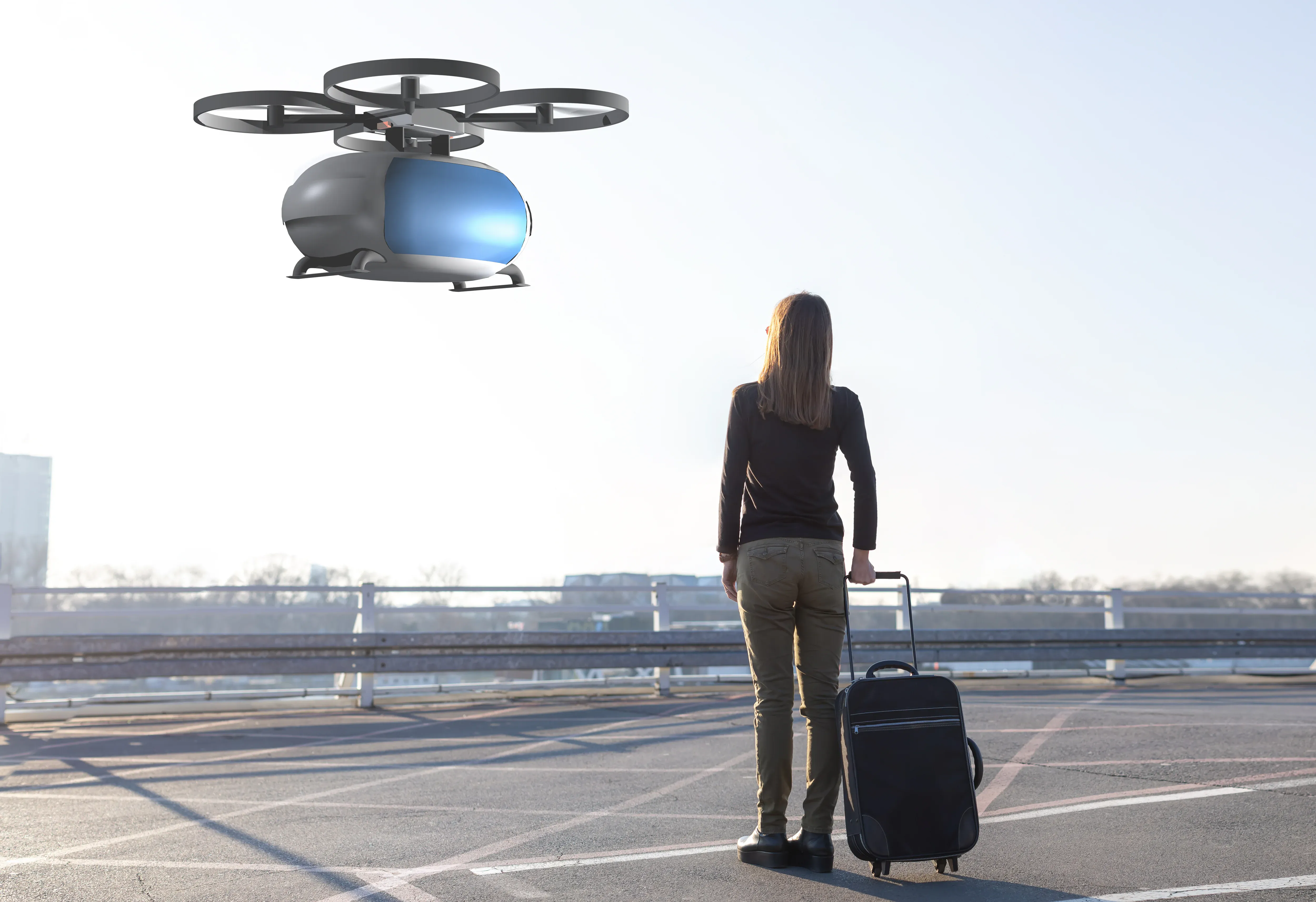
Europe's urban skies are approaching a turning point. eVTOL aircraft are moving through certification, cargo drone networks are proving commercially viable, and regulators are building the frameworks to integrate these systems into existing airspace. Yet one question remains largely unresolved — where these aircraft will land, charge and connect passengers to the wider transport network.
Unlike the aircraft themselves, vertiports cannot be trialled in isolation and scaled gradually. Most will be permanent urban fixtures requiring planning consent, grid connections, airspace coordination and public acceptance. The question is no longer whether vertiports will be built, but who builds them, how, and under what commercial model.
More than a modern helipadA vertiport is not a rebadged rooftop landing pad. eVTOL aircraft need rapid-turnaround charging — typically one to two megawatts per pad, enough to power more than a thousand homes at once. A busy site running a hundred flights a day could draw forty to sixty megawatt-hours, demanding a dedicated grid connection and, increasingly, on-site energy storage. EASA's design guidance also introduces an obstacle-free volume: a funnel of clear airspace above each pad that constrains adjacent buildings, signage and vegetation. Vertiports are aviation infrastructure embedded in dense cities — as much a planning challenge as an aviation one.
The regulatory foundation is taking shapeEurope moved early. In March 2022, EASA published the world's first Prototype Technical Design Specifications for Vertiports, developed with operators including Ferrovial and Skyports and manufacturers such as Airbus and Volocopter. That work now feeds a full rulemaking task covering design, operators and oversight authorities. In the UK, the Civil Aviation Authority has mapped the gap between existing heliport rules and emerging guidance — a convergence that would reduce complexity for operators serving both markets. Without a stable approval framework, developers cannot secure financing, and without financing, vertiports cannot be built.
A fractured ownership landscapeThere is no single builder. Purpose-built operators such as Skyports and Italy's UrbanV are developing networks at scale, dependent on aircraft partnerships and patient capital. Infrastructure conglomerates such as Ferrovial bring modular, rapid-rollout models and the financial base to absorb long pre-revenue periods. Existing airport operators are extending into the new mobility layer, while real estate developers could unlock urban sites that pure aviation operators cannot reach. Each model brings strengths; none can build the network alone.
The commercial challengeThe business case is still unproven. Certification timelines, passenger willingness to pay, route viability and infrastructure costs must all align. The recent insolvency of two prominent European eVTOL manufacturers showed how tightly infrastructure risk is bound to the aircraft programmes vertiports are meant to serve. Even so, forecasts point to a global market growing from roughly $0.4 billion in 2023 to $10.7 billion by 2030. The most viable near-term model is the airport shuttle — defined catchment areas, existing passenger infrastructure and manageable regulatory complexity make it the natural first application.
No single organisation can deliver this aloneThe challenge spans aviation regulation, urban planning, energy infrastructure, transport integration and public communication — disciplines that do not naturally converge. Grid operators must plan for demand that does not yet exist. Municipal authorities must make development viable without indefinite subsidy. And communities near proposed sites must be engaged early and honestly, because public acceptance is earned, not assumed.
The clearer the regulatory, commercial and technical framework becomes, the faster ambition translates into infrastructure that is financed, permitted and operational. For developers, investors, operators and policymakers alike, staying connected to the broader ecosystem is operationally necessary.
Join the conversation at DroneX 2026DroneX brings the uncrewed systems and future flight communities together to advance the shared questions no single organisation can resolve alone — where eVTOL developers, vertiport specialists, UTM providers, battery manufacturers and autonomous logistics operators meet the regulators and operators their technologies are built to serve.
DroneX 2026 — 29 – 30 September 2026, ExCeL London. Free to attend, across four sectors: Commercial, Defence, Emergency Services and Future of Flight.
Get your pass: Click here
We hope to see you in London this September.
Source: autonomyglobal.co/vertiports-rising-who-will-build-europes-low-altitude-future
)